
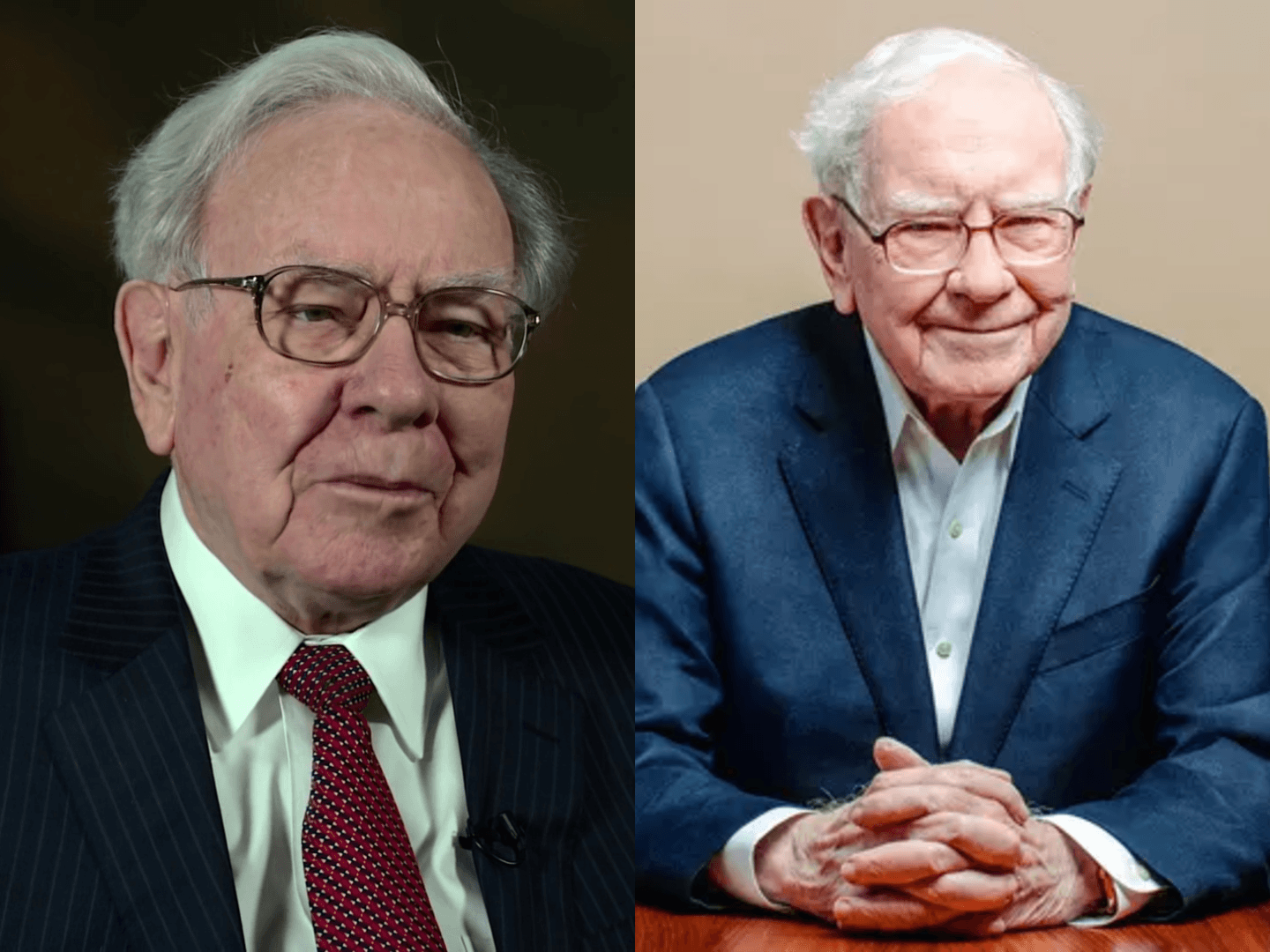
Warren Buffett net worth currently stands at approximately $149 billion according to Forbes, placing the legendary investor ninth on the 2026 World’s Billionaires list . This figure was calculated using stock prices and exchange rates as of March 1, 2026 . The “Oracle of Omaha” has built his fortune almost entirely through his leadership of Berkshire Hathaway, a conglomerate that owns dozens of businesses and holds massive stock portfolios. His wealth has become one of the most tracked financial metrics in the world, reflecting not just personal success but the power of patient, value-driven investing.
The 2026 Forbes ranking placed Buffett behind tech titans and luxury magnates, including Elon Musk, Jeff Bezos, Bernard Arnault, and Jensen Huang . A slightly lower estimate of $144 billion was reported by MarketScreener in July 2026, based on Berkshire’s quarterly filings . These variations highlight how Buffett’s net worth fluctuates with Berkshire’s stock price and the broader market. Berkshire stock was roughly flat in 2026 as of mid-year, even as the S&P 500 gained about seven percent . This underperformance reflects investor uncertainty about the company’s massive cash hoard and the leadership transition.
Berkshire’s cash reserves reached a staggering $397 billion by the end of the first quarter of 2026, up from around $373 billion at the end of 2025 . This sum equals more than a third of Berkshire’s entire market value and dwarfs the market capitalization of major corporations like Home Depot and Procter & Gamble . The cash pile has grown because Berkshire has been a net seller of stocks for more than a dozen consecutive quarters, parting with over $150 billion more in equities than it has bought since late 2022 . Buffett has been candid about the reasoning, telling CNBC that a five or six percent market decline is not enough to put Berkshire’s money to work . He noted that Berkshire’s share price has dropped more than fifty percent on three separate occasions during his tenure, suggesting he is waiting for much larger dislocations .
The 2026 annual shareholder meeting in Omaha was historic, marking Buffett’s first year as chairman emeritus after handing the CEO role to Greg Abel at the start of the year . The meeting opened with a video tribute to Buffett’s six-decade career, and Abel hung a commemorative jersey bearing the number sixty alongside one for the late Charlie Munger . Buffett, now 95, sat in the front row and received a standing ovation from thousands of shareholders. He publicly endorsed Abel in the strongest possible terms, telling the audience that Abel is doing everything he did and is doing it better in all cases . This public vote of confidence sought to reassure investors that Berkshire’s culture and investment discipline would survive its founder’s departure.
Abel’s first major acquisition as CEO was the purchase of homebuilder Taylor Morrison for about $8.5 billion, including debt, in late May 2026 . The deal, priced at $72.50 per share, fits the classic Berkshire playbook of buying an out-of-favor cyclical business with cash. However, $8.5 billion barely moves the needle on a $397 billion cash position. Berkshire also agreed to invest an additional $10 billion in Alphabet as part of the tech giant’s capital raise, and the company increased its overall Alphabet holdings by eighty-three percent in the second quarter to roughly 106 million shares . Alphabet is now Berkshire’s third-largest holding, worth about $37.8 billion, as the conglomerate places a significant bet on artificial intelligence infrastructure through Google Cloud .Quick Bio
Abel also restarted share repurchases in March 2026 after a pause of nearly two years, spending about $234 million on Berkshire stock . This token amount is insignificant compared to the cash pile, but it signaled a shift in policy. Abel has committed to buying roughly $15.3 million in Berkshire Class A shares each year he serves as CEO, directly tying his personal wealth to shareholder outcomes . The company has long maintained a policy of buying back stock only when management believes the price is below intrinsic value. Abel’s decision to restart buybacks suggests he sees some value at current levels, even if not enough to deploy a meaningful share of the cash reserves.
The Berkshire chairman has excluded the Gates Foundation from his annual charitable stock gifts for the first time since making his initial pledge in 2006 . Instead, Buffett directed approximately $6 billion in Berkshire Class B shares to four family-linked foundations. The Susan Thompson Buffett Foundation, named after his late first wife, received 9 million shares worth roughly $4.5 billion . Three foundations run by his children, the Sherwood Foundation, the Howard G. Buffett Foundation, and the Novo Foundation, each received 1 million shares worth just under $500 million . This marks a more than fourfold increase in the amount given to family foundations compared to the previous year .
Buffett also accelerated his timeline for disposing of his entire Berkshire stake, telling shareholders that his goal is to give away all of his remaining shares by December 31, 2034 . He acknowledged that his children are unfortunately growing older and that he hopes they can carry out the disposal within eight years . This represents a significant change from his previous plan, which allowed his children ten years after his death to distribute his fortune. Buffett’s statement made clear that mortality is unpredictable and that his remaining shares will be donated to the four foundations one way or another by the 2034 deadline . He wants the grants to grow annually to each of the three foundations managed by his children, with the Susan Thompson Buffett Foundation receiving a somewhat greater rate of growth.
The decision to drop the Gates Foundation followed the disclosure of Bill Gates’s ties to convicted sex offender Jeffrey Epstein . Buffett told CNBC that he had not spoken with Gates at all since the whole thing was unveiled and that until it gets cleared up, he does not think it makes sense to do a lot of talking . The Gates Foundation responded with a statement expressing gratitude for Buffett’s decades of support, noting that his gifts, totaling more than $47 billion, have helped expand and deliver on the foundation’s mission to improve health and opportunity around the world . The foundation continues from a position of financial strength to advance its work through 2045, supported by Bill Gates’s own $200 billion commitment .
The scale of Buffett’s giving over nearly two decades is staggering. Since 2006, he has donated more than $61 billion worth of Berkshire stock to various charitable organizations . The vast majority went to the Gates Foundation, but the family foundations also received significant sums. Buffett’s total lifetime giving exceeds $60 billion, a figure that dwarfs most individual philanthropic contributions in history. His net worth would likely exceed $300 billion today if he had not given away so much stock, placing him firmly at the top of the global wealth rankings.
Berkshire’s operating businesses continue to perform well under Abel’s leadership. First-quarter operating earnings rose eighteen percent to $11.35 billion, driven by a 28.5 percent jump in insurance underwriting profit . Net income more than doubled to about $10.1 billion from $4.6 billion in the same period a year earlier . These results demonstrate that Berkshire’s core operations remain healthy even as the company avoids deploying cash into equities. The bulk of Berkshire’s liquid reserves, roughly $339 billion, sits in short-term Treasury bills currently yielding around 3.7 percent . The company earned $3.07 billion in discount accretion on Treasury bills during the first quarter alone, putting the cash pile on track to generate roughly $12 billion in annualized interest income .
The so-called Buffett Indicator, which compares total U.S. stock market capitalization to gross domestic product, now sits at around 230 percent . This metric, which Buffett endorsed in a 2001 Fortune article, suggests the stock market is significantly overvalued relative to the size of the economy. GuruFocus data shows that when the Buffett Indicator has reached current levels, forward-looking stock returns have historically run below the long-term average for years . This valuation signal helps explain why Berkshire is comfortable earning four to five percent on Treasury bills rather than buying equities at record prices. Buffett told CNBC that he is not in it to make five or six percent, indicating he is waiting for substantially larger discounts.
The leadership transition at Berkshire Hathaway represents one of the most closely watched succession stories in corporate history. Buffett took control of a struggling textile manufacturer in 1965 and transformed it into a nearly $1.1 trillion conglomerate. The company now owns more than sixty businesses, including insurance agency Geico and battery maker Duracell, and holds major stakes in Apple, American Express, Coca-Cola, Bank of America, and now Alphabet . Abel, who joined Berkshire in 1992 through its acquisition of MidAmerican Energy, has been groomed for the CEO role for years. He previously ran Berkshire’s non-insurance operations and has deep experience in capital allocation and managing the company’s diverse subsidiaries .
Berkshire’s massive cash hoard has led some analysts to suggest that Abel should consider a special dividend or more aggressive buybacks . The company has only paid a dividend once during Buffett’s tenure, back in 1967, and has historically preferred to deploy capital through acquisitions and stock purchases. Meyer Shields, an analyst at KBW, expressed surprise at the absence of any sort of dividend and the sustained unwillingness to pay dividends . Alex Morris, author of “Buffett and Munger Unscripted,” has suggested a special dividend as an option Abel could weigh if other outlets for capital remain scarce . Abel’s approach emphasizes treating outside capital as a trust rather than a trophy, maintaining a conservative balance sheet and avoiding short-term pressures .
The decision to boost Berkshire’s position in homebuilders reflects a contrarian bet on a sector that has struggled significantly. Lennar, the homebuilder Berkshire added to in the second quarter, has seen revenue growth negative for five consecutive quarters, and the stock is down more than thirty percent over the past fifty-two weeks . Berkshire increased its position in Lennar by nearly thirty percent to 13.4 million shares, worth approximately $1.2 billion . The company also initiated a small new position in D.R. Horton and maintained its investment in NVR . These moves suggest Abel sees value in the housing sector, even as homebuilders face pressure from high interest rates and affordability challenges. The timing may reflect a belief that the sector is beginning to bottom out, with some financial metrics showing signs of improvement.
The story of Warren Buffett net worth is not merely a tale of accumulating billions but one of disciplined capital allocation, patient investing, and extraordinary philanthropic ambition. The 2026 Forbes valuation of $149 billion captures only a moment in time, a snapshot of a fortune that has been deliberately reduced through decades of giving. Buffett’s wealth is now in the hands of a new generation of leadership, with Greg Abel responsible for deploying the largest cash reserve in corporate history while preserving the values and culture that made Berkshire an icon of American capitalism. The oracle has passed the torch, but his influence on investing, corporate governance, and philanthropy will endure for decades.1. What is Warren Buffett’s net worth as of 2026?
Warren Buffett net worth is estimated at approximately $149 billion according to Forbes’ 2026 World’s Billionaires list, which ranks him as the ninth richest person globally. A slightly lower estimate of $144 billion was reported by MarketScreener in July 2026, reflecting normal fluctuations in Berkshire Hathaway’s stock price.
2. Why did Warren Buffett stop donating to the Bill & Melinda Gates Foundation?
Buffett excluded the Gates Foundation from his annual charitable stock gifts for the first time in 2026, directing approximately $6 billion instead to four family-linked foundations. He told CNBC the decision followed the disclosure of Bill Gates’s ties to convicted sex offender Jeffrey Epstein, stating he had not spoken with Gates since the matter became public.
3. Who replaced Warren Buffett as CEO of Berkshire Hathaway?
Greg Abel officially succeeded Buffett as chief executive officer at the start of 2026, ending Buffett’s six-decade tenure at the helm of the conglomerate. Buffett remains involved as chairman emeritus and received a standing ovation at the 2026 annual shareholder meeting in Omaha.
4. Why is Berkshire Hathaway holding nearly $400 billion in cash?
Berkshire’s cash reserves reached $397 billion by the end of the first quarter of 2026 because the company has been a net seller of stocks for over twelve consecutive quarters. Buffett has stated that current market valuations, with the Buffett Indicator at around 230 percent, do not offer attractive enough prices to deploy that capital.
5. How much has Warren Buffett donated to charity over his lifetime?
Buffett has donated more than $61 billion worth of Berkshire stock to charitable organizations since making his initial pledge in 2006. His net worth would likely exceed $300 billion today if he had not given away so much stock, and he has pledged to give away more than 99 percent of his remaining fortune by 2034.
