
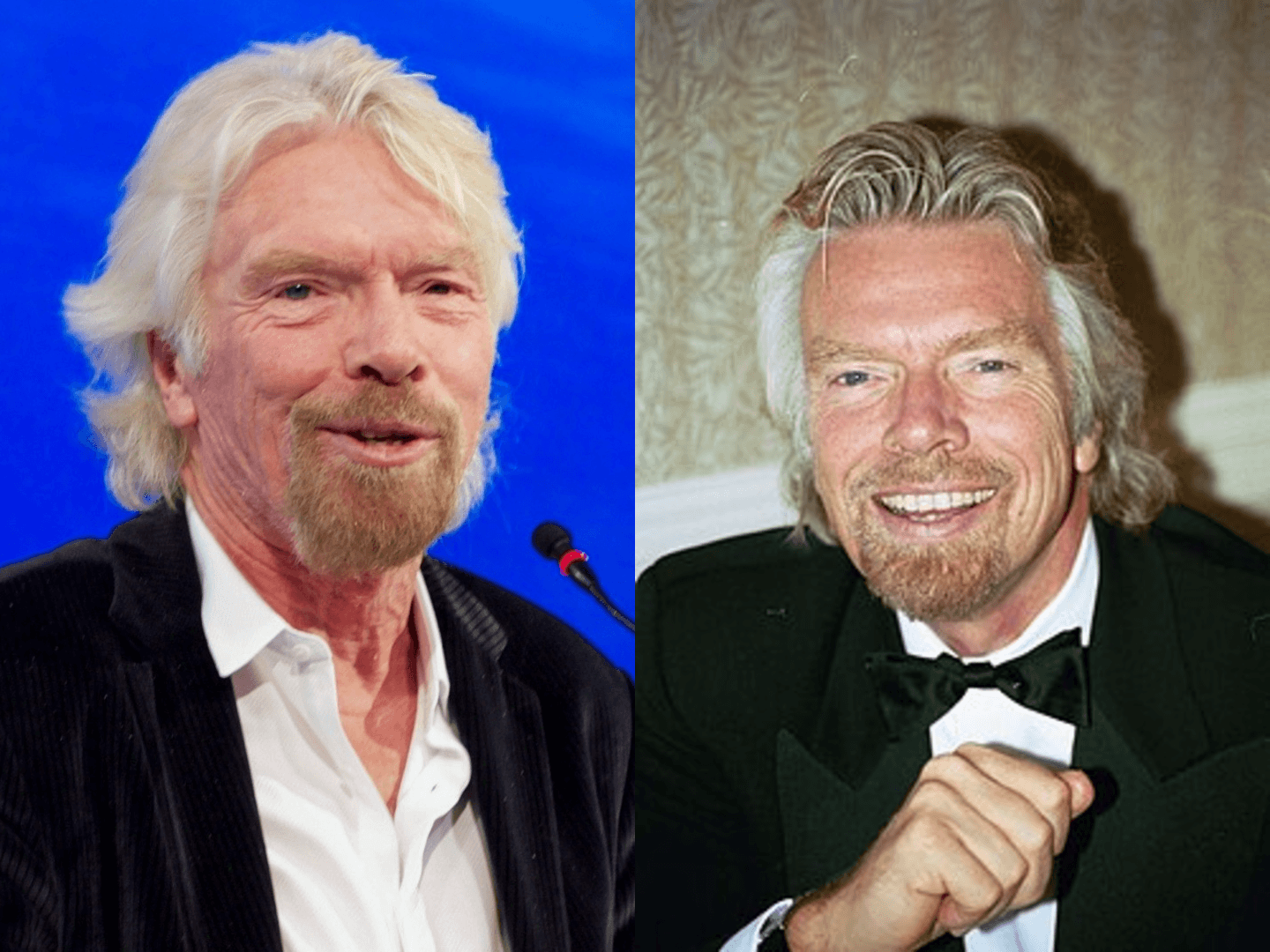
As of September 2026, Sir Richard Branson’s net worth is estimated at $2.8 billion. While he ranks far below the world’s richest billionaires, his wealth stems from the sprawling Virgin Group, a collection of over 40 companies generating billions in annual revenue. Branson’s fortune is best understood by examining the businesses he built and how he navigated decades of entrepreneurial risk.
The Making of a Maverick Entrepreneur
Born on July 18, 1950, in London, Branson grew up in a household that encouraged independence. His mother, Eve, famously left him half a mile from his grandparents’ house at age four, insisting he walk there alone. That spirit of self-reliance defined his career. Branson struggled with undiagnosed dyslexia throughout his school years. On his last day of school, his headmaster predicted he would either end up in prison or become a millionaire. He nearly proved the first prediction true when he was arrested for customs tax evasion, but he avoided prison by paying over £50,000 in back taxes.
At fifteen, Branson launched a magazine called Student, which featured interviews with celebrities including Mick Jagger and even a letter from President Lyndon Johnson. The magazine gave him early experience in publicity, a skill he would deploy across all future ventures. When Student faltered, he pivoted to selling records by mail order. That business succeeded quickly, and when a postal strike threatened it, Branson opened his first record store on Oxford Street in London.
The Virgin Empire Takes Shape
Branson founded the Virgin brand in 1970 as a mail order record retailer. He picked the name because he and his business partners were all new to business. In 1972, he launched Virgin Records as a record label and purchased a country estate with a residential recording studio. The label’s first release was Mike Oldfield’s Tubular Bells, a chart-topping bestseller that sold over five million copies. Virgin Records went on to sign controversial acts like the Sex Pistols and Culture Club, building a reputation as a label willing to take risks.
Branson launched Virgin Atlantic Airways in 1984. The airline grew to become the second largest British long haul international airline, operating a fleet of wide-body jets to destinations across the United States, Asia, Africa, and the Caribbean. The airline won multiple Airline of the Year awards and differentiated itself with superior service. Branson also faced fierce competition, including a well-documented “dirty tricks” campaign from British Airways that gave Virgin Atlantic massive publicity and established Branson as an entrepreneurial underdog.
In 1992, Branson sold the equity of Virgin Music Group, including record labels, music publishing, and recording studios, to EMI for approximately $1 billion. He used the proceeds to fund Virgin Atlantic during a difficult period for the airline, which had lost £82.7 million in the year to April 2001.Quick Bio: Sir Richard Branson
| Field | Details |
|---|---|
| Full Name | Sir Richard Charles Nicholas Branson |
| Age | 76 years old (born July 18, 1950) |
| Birthplace | Surrey, England |
| Nationality | British |
| Profession | Entrepreneur, Founder of Virgin Group |
| Height | Approximately 5 feet 11 inches (1.8 m) |
| Education | Dropped out of school at 17; struggled with undiagnosed dyslexia |
| Years Active | 1966–present (began with Student magazine at age 15) |
| Notable Works | Virgin Records, Virgin Atlantic Airways, Virgin Galactic, Virgin Mobile, Virgin Active |
| Awards | Knighted by Queen Elizabeth II (2000) ; Time Magazine “100 Most Influential People” (2007) ; UN Correspondents Association Citizen of the World Award (2007) |
| Net Worth | Estimated at $2.8 billion (as of September 2026) |
| Spouse / Partner | Married to Lady Joan Templeman from 1989 until her recent passing ; previously married to Kristen Tomassi (1972–1979) |
| Children | Holly (b. 1981) and Sam (b. 1985) with Joan Templeman |
| Social Media | Over 30 million followers across platforms, including Instagram (@richardbranson), LinkedIn, and his personal blog on virgin.com |
The Evolution of Virgin Group
By 2025, the Virgin Group encompassed around 40 companies employing over 60,000 people across 35 countries. The portfolio spans aviation, space tourism, fitness, telecommunications, financial services, hotels, and renewable energy. Branson’s business model, which he calls “branded venture capitalism,” involves developing discrete businesses with their own investors while leveraging the Virgin brand. Research shows the Virgin brand can make marketing spend up to ten times more efficient at driving consumer consideration compared to peers. Virgin companies also demonstrate lower employee churn rates and an ability to command pricing premiums.
Virgin Galactic, founded in 2004, licenses SpaceShipOne technology and aims to take private paying individuals to space. In 2026, the company reported quarterly revenue of $13.4 million and has approximately 650 customer reservations. Tickets sell for $750,000 each. Commercial flights have been delayed to February 2027, with the next generation of spaceships planned for test flights in late 2026.
Branson also expanded into rail travel in the 1990s, operating Virgin Cross-Country and Virgin West Coast services. Virgin Rail was profitable until 2001, though government operating subsidies were scheduled to be phased out. Branson sold 49 percent of Virgin Rail to Stagecoach for £158 million. He also acquired Euro-Belgian Airlines and relaunched it as Virgin Express, competing against low-cost carriers like EasyJet.
The $2.8 Billion Net Worth in Context
Branson’s net worth has fluctuated significantly over the years. Forbes listed his estimated net worth at $5.2 billion in January 2016. By July 2021, Forbes placed it at $5.7 billion. The current estimate of $2.8 billion reflects a substantial decline, partly driven by challenges across the Virgin Group. Virgin Atlantic generated $4.4 billion in annual revenue and carried 5.6 million passengers in 2025. However, rising fuel costs, exacerbated by Middle East conflicts, have squeezed margins. Fuel prices surged from $85-90 per barrel to $150-200 per barrel. Branson publicly blamed rising flight prices on “foolish leaders” starting wars. Virgin Atlantic also failed in an expansion into the Middle East, canceling its London-Riyadh route after just one year.
Estimating Branson’s net worth is complicated by the private nature of most Virgin companies. Limited public information and different financial years for those companies that do report figures hinder external efforts to calculate consolidated financial statements. His wealth is also tied up in trusts and personal assets, including Necker Island, the private island he bought at age 29.
Philanthropy and Public Persona
Branson received a knighthood in 2000 for his services to entrepreneurship. He co-founded The Elders with Nelson Mandela, a group of global leaders working for peace and human rights. He has also invested in clean energy and biofuels through Virgin Fuels and the Virgin Green Fund. Branson remains one of the most recognized entrepreneurs in Britain, with annual polls showing teenagers consistently vote him the businessman they most admire.
In 2007, Branson handed day-to-day control of the Virgin Group to an investment committee of accountants, lawyers, and consultants. He adopted the title of founder and continues to promote the brand and develop new business ventures. The committee is led by Stephen Murphy, an accountant who joined Virgin Group in 1999. The shift represented a move toward more professional management of assets, though Branson’s personal influence and brand recognition remain central to Virgin’s success.
Ongoing Challenges in 2026
Virgin faced regulatory scrutiny in August 2026 when the UK Competition and Markets Authority launched an investigation into “step pricing” practices. The investigation covers pricing structures across Virgin’s businesses, potentially affecting multiple revenue streams. Branson’s name also appeared in documents related to the Epstein archive in January 2026, forcing Virgin Group to issue a clarification about an email exchange. The boutique hotel segment, which includes Necker Island, Ulusaba, Kasbah Tamadot, and Son Bunyola, made a combined loss of £5 million in 2024, though this was an improvement from the £10 million loss in 2023. Kasbah Tamadot remained closed until October 2024 due to the 2023 earthquake.
The Value Beyond the Numbers
Branson’s net worth of $2.8 billion places him well outside the top tier of global billionaires. But his influence extends far beyond his personal fortune. The Virgin brand enjoys 96 percent recognition in the United Kingdom. His control over the Virgin Group, despite the 2007 management shift, gives him leverage that his net worth alone does not capture. Branson’s ability to pivot between industries, from records to airlines to space travel, reflects an entrepreneurial mindset that defined his career from his earliest days selling records by mail.
The challenges facing Virgin Atlantic, the delays at Virgin Galactic, and the regulatory investigations suggest that maintaining that net worth will require the same bold decision-making that built it. Branson told his biographer he never intended to become an entrepreneur. But the dyslexic schoolboy who launched a magazine to change the world built one of the most recognizable brands in business history. That legacy, more than a fluctuating net worth, defines Richard Branson’s place in the business worldFrequently Asked Questions About Richard Branson’s Net Worth
What is Richard Branson’s net worth in 2026?
As of September 2026, Richard Branson’s net worth is estimated at $2.8 billion. This figure comes from analysis of his holdings in the Virgin Group, which includes over 40 companies spanning aviation, space tourism, fitness, and telecommunications.
Why has Richard Branson’s net worth declined from previous years?
Branson’s net worth has dropped from $5.7 billion in July 2021 to the current $2.8 billion. Key factors include rising fuel costs affecting Virgin Atlantic, delays at Virgin Galactic, increased competition across multiple sectors, and the private nature of many Virgin companies making accurate valuation difficult.
How did Richard Branson make his money?
Branson built his fortune through the Virgin Group, starting with Virgin Records in 1970. He sold the record label to EMI for approximately $1 billion in 1992 and used the proceeds to fund Virgin Atlantic. His wealth now comes from diverse holdings including aviation, space tourism, fitness clubs, telecom, and financial services.
Does Richard Branson own Virgin Atlantic outright?
No. Virgin Atlantic is not wholly owned by Branson. The airline has external investors and its ownership structure has evolved over time. While Branson retains significant control through the Virgin Group, the airline operates as a separate entity with its own board and shareholders.
What is Richard Branson’s most valuable asset?
The Virgin brand itself is considered Branson’s most valuable asset, with 96 percent recognition in the United Kingdom. Among tangible holdings, Virgin Atlantic and Virgin Galactic represent significant portions of his wealth, though their valuations fluctuate based on market conditions and operational performance.
