
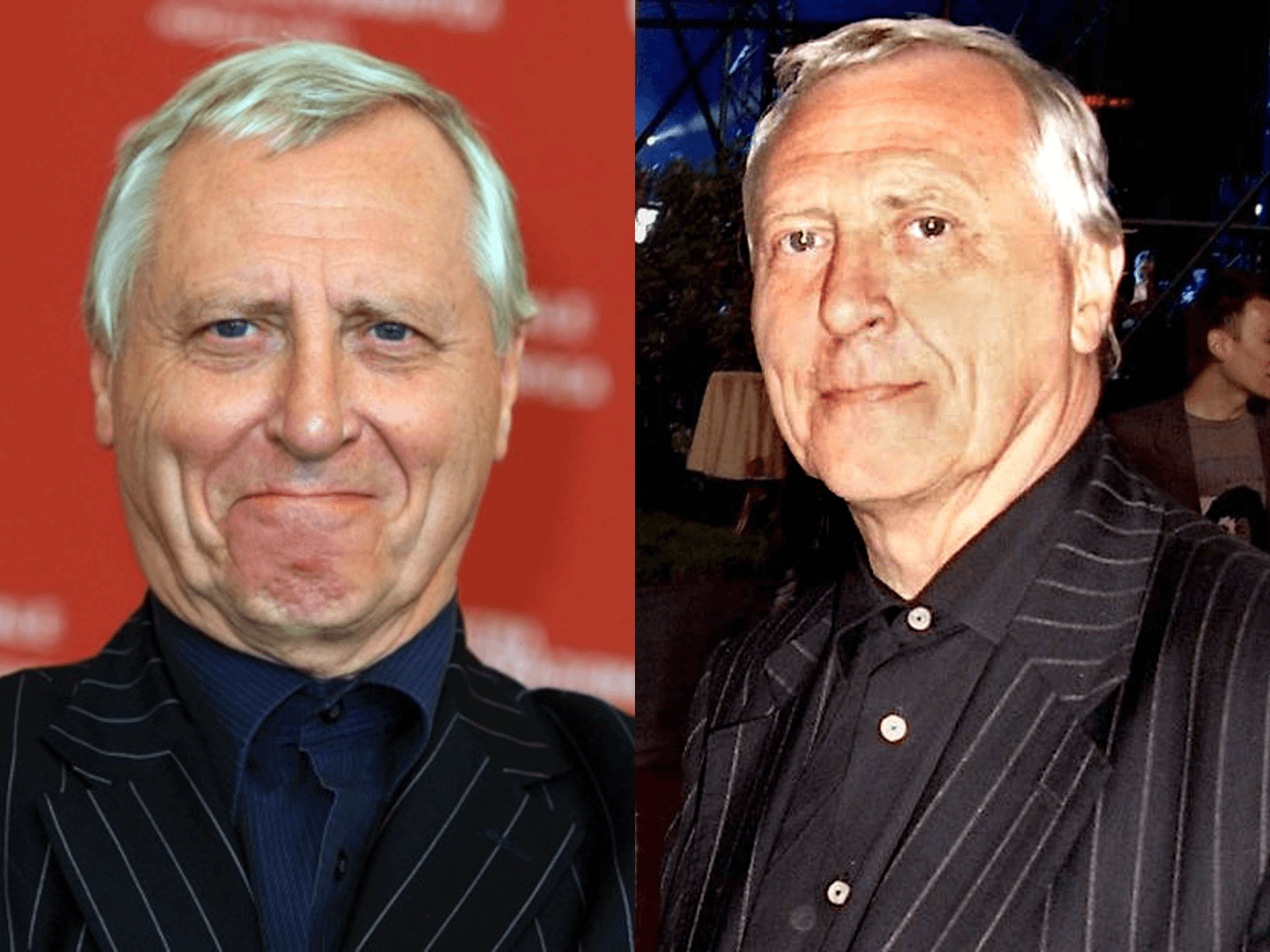
Peter Greenaway films are visually dense, intellectually demanding works that reject traditional storytelling in favor of painting-like composition and confrontational themes. The British director, who prefers the term “creator of images,” built a career on challenging how cinema communicates, prioritizing the single image over linear narrative .
Peter Greenaway films occupy a unique space in British cinema, defined by their painterly rigor and uncompromising subjects. Greenaway trained as a painter at Walthamstow College of Art before joining the Central Office of Information as a film editor in 1965 . This dual background shaped his conviction that cinema should function more like painting than literature.
His feature debut arrived in 1980 with The Falls, a mockumentary assembling 92 short biographies of disaster victims . International recognition followed two years later with The Draughtsman’s Contract, a period puzzle set in seventeenth-century England that established him as one of Britain’s most original filmmakers . The BFI notes this film helped change British film culture, proving intensely personal projects could be commercially viable with Channel 4 support .
The 1980s produced a remarkable run of features exploring Greenaway’s obsessive interests. A Zed & Two Noughts (1985) follows twin zoologists who become fixated on decay after their wives die in the same accident . The Belly of an Architect (1987) stars Brian Dennehy as an American architect in Rome whose professional and physical decline intertwine; it was nominated for the Palme d’Or at Cannes . Drowning by Numbers (1988) structures three husband-murders around children’s games and a literal numerical countdown .
Greenaway’s most notorious work, The Cook, the Thief, His Wife & Her Lover (1989), brought him his widest audience. Set entirely within a restaurant, the film uses gluttony, violence, and cannibalism to examine power and revenge . The BBC identifies it as both his most successful and most controversial film . Greenaway has stated that life offers only two subjects: “One is sex and the other is death,” and he romanticizes neither .Peter Greenaway Quick Bio
The 1990s saw literary adaptations filtered through his visual sensibility. Prospero’s Books (1991) radically reimagined Shakespeare’s The Tempest with John Gielgud, while The Pillow Book (1995/1996) explored calligraphy, the body, and obsession, starring Vivian Wu and Ewan McGregor . The Baby of Mâcon (1993) employed a play-within-a-film structure to frame its brutal treatment of religious figures .
Greenaway’s approach to cinema is explicitly anti-narrative. In a BFI interview, he argued that “the necessity that we’ve arranged to get cinema to tell stories is not a good idea at all” . He has criticized English-language cinema as “visually illiterate,” comparing the average filmgoer’s image vocabulary unfavorably to their command of language . His films instead draw on five thousand years of Western painting, with compositions referencing Renaissance, Baroque, and Flemish art .
This philosophy creates a distinctive viewing experience. His camera frequently remains static, treating the frame as a canvas rather than a window . Characters are often positioned within meticulously arranged tableaux, and structural systems—numbers, games, lists—organize the material in place of conventional plot . The result can feel cold and distancing to some viewers, while rewarding others with layers of visual and intellectual pattern.
Music has been a crucial collaborator in his work. Michael Nyman scored eleven Greenaway films between 1976 and 1991, including The Draughtsman’s Contract and The Cook, the Thief . Greenaway has spoken about seeking composers rather than “people who write music for the cinema,” valuing creative freedom over functional scoring .
Later work has moved toward multimedia and biography. Nightwatching (2007) dramatized the creation of Rembrandt’s The Night Watch . The Tulse Luper Suitcases, begun in the early 2000s, expanded into an ongoing project spanning films, exhibitions, books, and online elements . Greenaway received a CBE in the 2007 New Year Honours for services to film .
For newcomers, The Belly of an Architect offers the most accessible entry point. Brian Dennehy’s central performance grounds the film’s visual extravagance in genuine emotional weight, and the Rome setting provides architectural spectacle without overwhelming narrative coherence . The Draughtsman’s Contract remains a strong second step, its murder-mystery framework offering enough conventional pleasure to sustain viewers through Greenaway’s more demanding formal experiments .
Greenaway’s legacy is that of a filmmaker who insisted cinema could be a visual art first and a storytelling medium second. His work divides audiences precisely as intended, rejecting the sentimental and sanitary in favor of the rigorous and confrontational. Whether one finds his films profound or exasperating, they are unmistakably the product of a singular artistic vision.
What is Peter Greenaway best known for?
He is best known for visually dense, controversial films that prioritize image over narrative. His most famous work is The Cook, the Thief, His Wife & Her Lover (1989), a baroque revenge drama notorious for its violence and nudity . Greenaway, a trained painter, calls himself a “creator of images” rather than a storyteller .
Which Peter Greenaway film should a beginner watch first?
The BFI recommends starting with The Belly of an Architect (1987). It is considered his most accessible film because Brian Dennehy‘s powerful performance grounds the story emotionally, even though it retains Greenaway’s signature structural puzzles and visual rigor . It was nominated for the Palme d’Or at Cannes .
Why did Peter Greenaway say “cinema is dead”?
He argued that cinema had become lazy and overly reliant on literary adaptations rather than exploring the visual power of the medium. In a 2002 interview, he claimed the art form needed to reinvent itself, criticizing filmmakers for churning out formulaic pictures instead of creating original, image-driven work . He later clarified his target was conventional narrative cinema, not the medium itself .
What are the recurring themes in Peter Greenaway films?
His films consistently confront sex and death, often without sentimentality. Greenaway has stated that life offers only these two subjects, and his work examines them alongside power dynamics, the human body, and decay . He also explores the tension between visual art and text, frequently structuring films around paintings, numbers, or lists rather than traditional plots .
Did Peter Greenaway receive any major honors?
Yes. He was appointed CBE (Commander of the Order of the British Empire) in the 2007 New Year Honours for services to film . His film The Belly of an Architect was nominated for the Palme d’Or at the 1987 Cannes Film Festival .
