
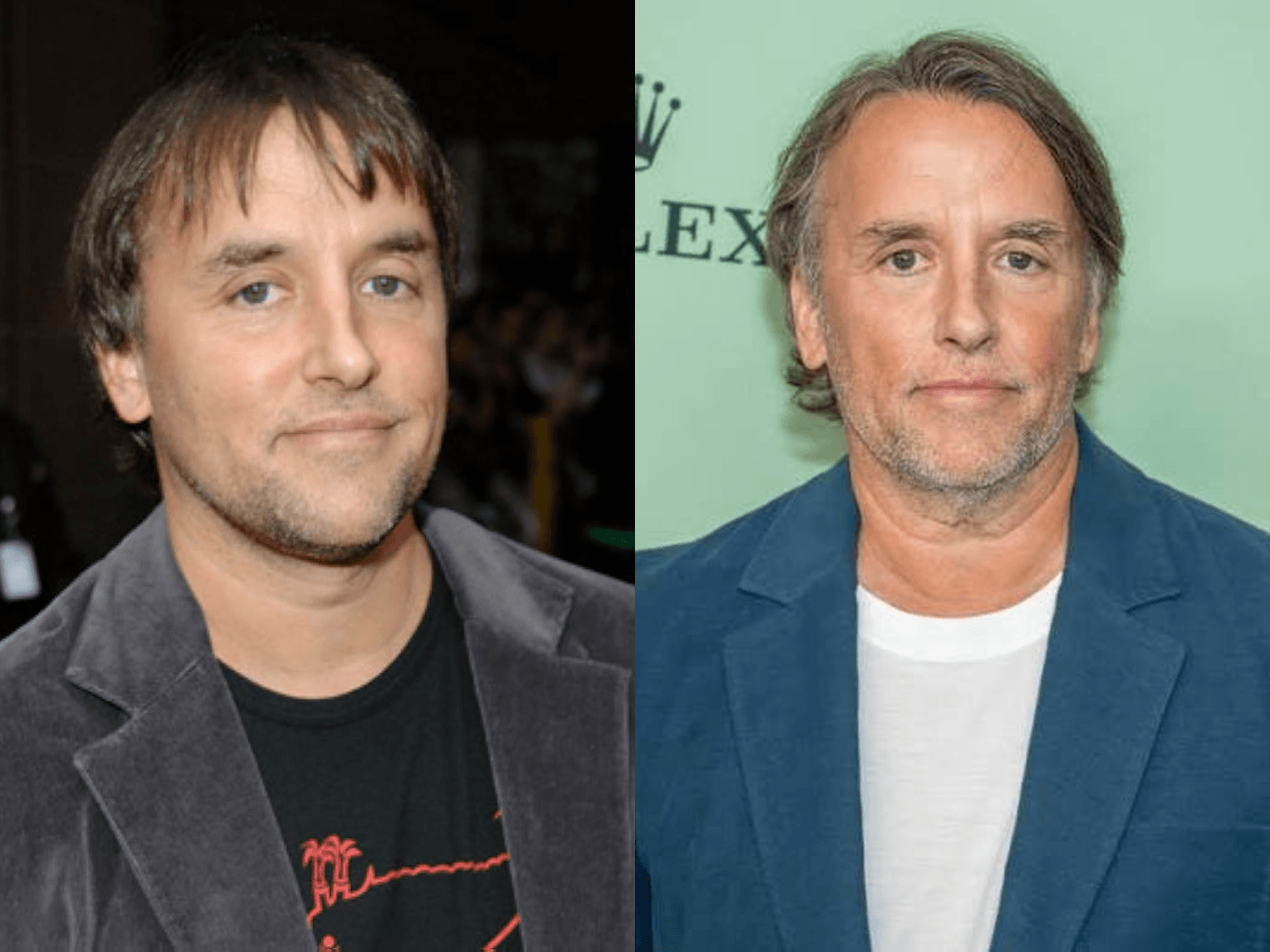
Richard Linklater is one of American cinema’s most distinctive voices, a filmmaker who has spent more than three decades exploring the passage of time, human connection, and the quiet moments that define ordinary lives. His movies resist easy categorization, shifting between independent dramas, mainstream comedies, and experimental animation while maintaining a consistent focus on authentic experience. From the landmark Before trilogy to the groundbreaking Boyhood, Linklater has built a career defined by patience, collaboration, and a willingness to let stories unfold at their own pace.
The Texas Roots That Shaped an Indie Auteur
Born on July 30, 1960, in Houston, Texas, Linklater grew up in a state that would become the backdrop for many of his most personal films . He moved to Austin in the 1980s and immersed himself in the city’s alternative culture, eventually founding the Austin Film Society. This organization, which he established to support independent filmmaking in Texas, became a hub for like-minded artists and a testament to his commitment to building community outside the Hollywood system. The society would later serve as a producer on Boyhood, a full circle moment for a filmmaker who never forgot his independent roots . His early work as a self-taught director, free from formal training, gave him a unique perspective that prioritized raw human interaction over technical polish. He was drawn to stories about suburban life, philosophy, and the aimless wanderings of young people searching for meaning.
The Slacker Ethos and Dazed and Confused
Linklater’s breakthrough came with Slacker in 1990, a film that defined the indie movement of that era. Shot on a shoestring budget in Austin, the movie follows a day in the life of various eccentrics, misfits, and oddballs, with the camera drifting from one character to the next in an episodic structure. The film captured the tenor of its time while establishing a benchmark for 1990s independent cinema . It was a bold rejection of traditional three-act storytelling, embracing a hangout vibe that would become a Linklater signature. Three years later, Dazed and Confused took this approach and applied it to the last day of high school in 1976. Featuring an excellent ensemble cast that included Matthew McConaughey in a career-launching role, the film was a funny, affectionate, and clear-eyed look at adolescent life . It remains a cult classic, beloved for its killer soundtrack and its precise feel for the 1970s.
The Before Trilogy and the Art of Collaboration
In 1995, Linklater released Before Sunrise, a romantic drama starring Ethan Hawke and Julie Delpy. The film followed a young American man and a French woman who meet on a train and spend one evening together walking through Vienna. Thought-provoking and beautifully filmed, it was an intelligent, unabashedly romantic look at modern love . The film was originally intended as a standalone story, but the characters resurfaced in Linklater’s 2001 animated film Waking Life, and something clicked for the director and his stars . Nine years after the original, Before Sunset reunited Jesse and Celine in Paris, catching up with them as they reconnected over the course of an afternoon. The film was nominated for an Academy Award for Best Adapted Screenplay . The trilogy concluded with Before Midnight in 2013, which found the couple nine years later vacationing in Greece, now facing the strains of a long-term relationship.
The writing process for these films was deeply collaborative. Linklater worked with Hawke and Delpy in workshop sessions, personalizing dialogue to achieve a level of realism that would have been impossible with a traditional script . The actors did not improvise on set. Instead, the three writers sat in a room and developed an extremely detailed outline, then exchanged monologues and scenes via email over the course of a year . Linklater served as a conduit, compiling and editing their contributions into a polished screenplay. The actors demanded that the material work its way through them, and the result was a trilogy that captures the way love feels with an authenticity few films can match.Quick Bio: Richard Linklater
| Field | Information |
|---|---|
| Full Name | Richard Stuart Linklater |
| Age | 65 years old (born July 30, 1960) |
| Birthplace | Houston, Texas, USA |
| Nationality | American |
| Profession | Director, screenwriter, producer |
| Height | 5 ft 9 in (175 cm) |
| Education | Attended Sam Houston State University (left in 1982); also attended Bellaire High School in Houston |
| Years Active | 1985–present |
| Notable Works | Slacker (1990), Dazed and Confused (1993), Before Sunrise (1995), Waking Life (2001), School of Rock (2003), Before Sunset (2004), A Scanner Darkly (2006), Before Midnight (2013), Boyhood (2014), Everybody Wants Some!! (2016) |
| Awards | Golden Globe for Best Director (Boyhood, 2015); BAFTA for Best Director (Boyhood); Silver Bear for Best Director (Before Sunrise, 1995); multiple Academy Award nominations |
| Net Worth | Estimated at $12 million (as of 2016) |
| Partner | Christina Harrison (partner since the 1990s) |
| Children | Three daughters: one born in 1994, twin girls born in 2004 |
| Social Media | No confirmed public social media accounts; official website: detourfilm.com |
Rotoscoping and the Animated Experiments
Between the installments of the Before trilogy, Linklater experimented with animation techniques that pushed the boundaries of visual storytelling. For Waking Life in 2001, he used rotoscoping, a process where animators trace over live-action footage. The technique was first developed by Max Fleischer in the early 20th century, but Linklater brought it into the digital age using software called Rotoshop, developed by Bob Sabiston . He shot his actors on digital video, then had artists use Wacom pens and tablets connected to Apple G5s to trace the movement of each scene. The software interpolated frames, creating a smooth, fluid motion that was impossible with traditional hand-drawn animation.
The choice to use rotoscoping was more by chance than anything else. Linklater had vague ideas for films that he could not visually represent, and when he saw Sabiston’s animations, he realized the style was exactly what he had in mind . In Waking Life, the effect allowed for the visual manifestation of lucid dreaming, with a man shuffling through a dream meeting various people who discuss the meanings and purposes of the universe . The inventive aesthetic added a distinctive visual component to a film that could have relied solely on its smart screenplay. Linklater revisited the technique in 2006 for A Scanner Darkly, an adaptation of Philip K. Dick’s novel starring Keanu Reeves, Winona Ryder, and Robert Downey Jr. The semi-real quality of rotoscoping was perfectly suited to the drug-addled, paranoid world of the story.
School of Rock and Mainstream Success
Amid his experimental work, Linklater proved he could also deliver mainstream entertainment. School of Rock in 2003 starred Jack Black as Dewey Finn, a failed rock musician who becomes a substitute teacher and turns his class into a band. Black’s exuberant, gleeful performance made the movie a hilarious, rocking good time . It was a commercial hit and expanded Linklater’s audience without sacrificing his commitment to character-driven storytelling. He followed this with a remake of Bad News Bears and the adaptation Fast Food Nation, continuing to demonstrate his range as a director capable of handling comedy, drama, and social commentary.
Boyhood and the 12-Year Commitment
Linklater’s most ambitious project arrived in 2014 with Boyhood, a film that took 12 years to complete. The idea struck him when he realized he could not pick a single moment to tell a story about growing up, so he decided to film a little bit each year . Principal photography began in 2002 with four lead cast members in place: Ellar Coltrane as Mason Jr., Linklater’s daughter Lorelei as his sister Samantha, Ethan Hawke as the father, and Patricia Arquette as the mother . Each actor committed to the 12-year-long shoot, which would eventually wrap in 2013.
The logistical challenges were significant. Every year, the core production team met for a five-day shoot, but scheduling proved tricky as everyone had other projects . Linklater described it as a weird life project rather than a traditional film. He knew the major character arcs from the beginning, including when the family would move or experience divorce, and he knew the final shot by year two or three . Within that framework, he allowed for openness, letting the actors and real-world events shape the characters’ journeys. Coltrane, who was just six when production began, became a true collaborator as he grew older, helping to craft dialogue and flesh out his character. Linklater deliberately kept Coltrane out of the editing room in case his young star got cold feet .
When the completed 166-minute epic was released, critics raved. The film earned a 100% score on Rotten Tomatoes and was nominated for six Oscars, winning Best Supporting Actress for Patricia Arquette . It remains the highest-grossing film in the Independent Film Company’s history, earning more than $25 million at the domestic box office . The movie captures something deeply human about growing up and the passage of time, focusing on the small moments in between life’s milestones rather than the typical firsts . In 2026, to celebrate its 12th anniversary, the film returned to theaters with cast reunions and special screenings, a testament to its enduring impact .
Later Works and Ongoing Innovations
After Boyhood, Linklater continued to explore familiar themes with fresh approaches. Everybody Wants Some!! in 2016 was a spiritual sequel to Dazed and Confused, following a college baseball team during the final weekend of summer in 1980 . Last Flag Flying in 2017 reunited him with Vietnam-era themes, while Where’d You Go, Bernadette in 2019 adapted Maria Semple’s popular novel. Apollo 10½: A Space Age Childhood in 2022 returned to rotoscoped animation, telling a coming-of-age story set in Houston during the Apollo 11 moon landing . His most recent work includes Hit Man in 2023, a comedic thriller co-written with and starring Glen Powell, as well as Blue Moon in 2025, which tells the story of Lorenz Hart’s struggles during the opening of Oklahoma! . Currently, he is working on a new project titled Merrily We Roll Along, which will film over the course of 17 years, following the structure of Boyhood on an even more extended timeline .
The Legacy of a Patient Storyteller
Linklater’s genius lies in his ability to make the ordinary feel profound. He has proven that cinema does not need explosions or high-concept plots to resonate deeply with audiences. His films are about conversations, relationships, and the slow accumulation of experience that defines a life. By committing to projects that take years or even decades to complete, he has created a body of work that stands as a counterpoint to the fast-paced, franchise-driven model of modern Hollywood. He has paved the way for other independent directors, showing that patience and authenticity can find an audience. His films teach us to pay attention to the small moments, the ones that often slip by unnoticed but ultimately shape who we become.What makes Richard Linklater’s filmmaking style unique?
Linklater’s style is defined by a focus on naturalistic dialogue, philosophical themes, and the passage of time. He often abandons traditional three-act structures in favor of “hangout” movies where characters simply exist and converse. His willingness to film projects over many years, as seen in Boyhood and the upcoming Merrily We Roll Along, sets him apart from virtually all other mainstream directors.
How long did it take to film Boyhood?
Boyhood was filmed over 12 years, from 2002 to 2013, using the same cast throughout. The production shot for approximately five days each year, allowing the actors to age in real time on screen. The final film runs 166 minutes and earned six Academy Award nominations, winning Best Supporting Actress for Patricia Arquette.
What is rotoscoping and why does Linklater use it?
Rotoscoping is an animation technique where artists trace over live-action footage to create a dreamlike, semi-realistic visual style. Linklater used digital rotoscoping with software called Rotoshop for Waking Life and A Scanner Darkly. He chose the technique because it allowed him to visually represent abstract concepts like lucid dreaming and drug-induced paranoia that would be difficult to capture in live action.
Are the Before trilogy films improvised?
No, the Before trilogy is not improvised, despite its naturalistic feel. Linklater, Ethan Hawke, and Julie Delpy spent months in collaborative writing sessions, exchanging monologues and scenes via email. They developed extremely detailed outlines and polished screenplays. The dialogue feels spontaneous because it was personalized to the actors, but every line was carefully written in advance.
What is Richard Linklater working on now?
Linklater is currently filming Merrily We Roll Along, a project that will shoot over 17 years, following the structure of Boyhood. He also directed Hit Man in 2023, a comedic thriller starring Glen Powell, and Blue Moon in 2025, a drama about Lorenz Hart. His career continues to balance experimental long-term projects with more conventional studio films.
